


A recent post in the Dumptruck fan group on Facebook brought back memories of one of the weirdest and most frustrating nights in my early career. Not surprisingly, my memory screwed up a few details, but Kirk Swan from the band straightened me out and that prompted a deeper dive into our failed August 1986 incursion into New York City.
This story is true, as far as our collective memory allows. We’ve lived with digital cameras and social media for so long that it’s weird to think of all the undocumented things we did back in the 20th century. Unless someone in your crew could afford the camera, film, and processing, there are dozens of big nights in everyone’s life that lack a visual record.
Dumptruck
Dumptruck was a Boston band who deployed a twin-guitar attack anchored by the singer/songwriters Kirk Swan and Seth Tiven. Shawn “King” Devlin was the drummer and bass was handled by Mike “Spike” Priggen, who had recently replaced Steve Michener.
They’d just released their second album Positively Dumptruck on Big Time Records, an independent label owned by former Air Supply manager Fred Bestall. Fred had lucked into the Hoodoo Gurus back home in Sydney and decided that this new wave music was an easy way to make a buck in the USA. He got rights to Love & Rockets, the Dream Syndicate, and somehow convinced Alex Chilton to come out of retirement.
Dumptruck’s “Back Where I Belong” was getting significant airplay on the handful of commercial alternative radio stations that existed in 1986 and tearing it up at college radio, so all signs were pointing upward.
Don Dixon produced Positively Dumptruck at Mitch Easter’s Drive In Studio in North Carolina, and its success allowed the band to tour the entire country. Things got tense in the van, and Kirk left at the end of the year. Seth Tiven has kept the band alive in various lineups over the years. I was fortunate enough to see Seth and Kirk play some Dumptruck shows together in the mid-aughts.
They sound more like Television to me, but R.E.M. fans of the era seem to have a particular affection for Dumptruck.
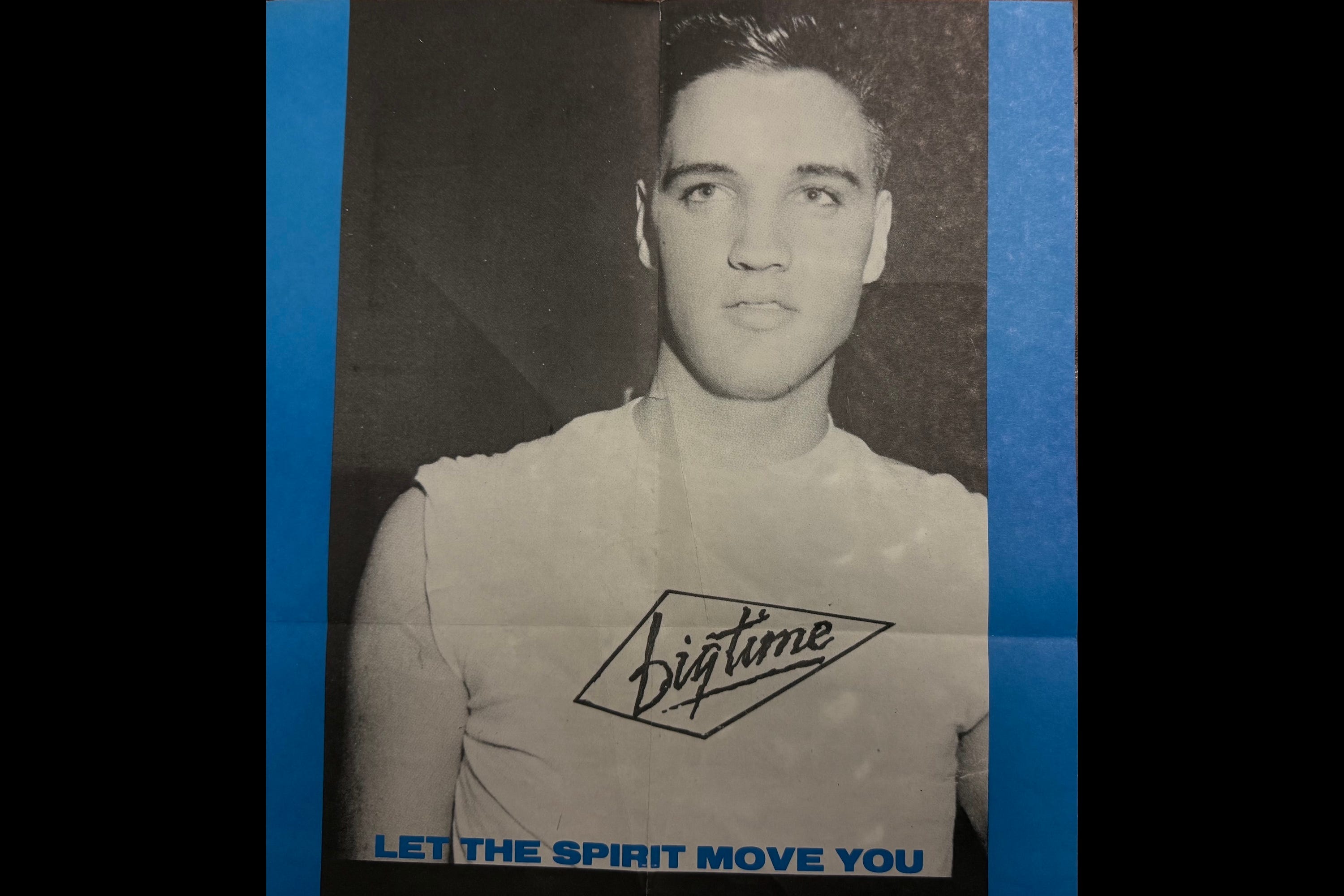
Big Time employed a couple of former Boston heavyweights in the LA office. Radio promotion man Mark Kates went on to a career in radio and A&R at Geffen/DGC before becoming president of the Beastie Boys’ Grand Royal label. A&R man Geoffrey Weiss enjoyed a long run of A&R success at A&M, Warner Bros., and Hollywood. He’s also one of the world’s preeminent record collectors.
Christmas
We all conspired to convince Fred to sign my other clients Christmas, a band that we all believed was important but also had compelling commercial potential if America would embrace its post-punk theatre. Michael Cudahy, Liz Cox, and Dan Salzmann were all larger-than-life personalities hiding out in an underground rock band.
Their debut LP In Excelsior Dayglo (released by Big Time) had a song about Pee Wee Herman written before he became a mainstream cultural phenomenon. Christmas were working some of the same turf as Pee Wee, but they were aiming for a slightly more highbrow performance art target and had a slightly menacing edge.
Christmas music went over the heads of the alternative rock community in 1986 and again in 1989 when I.R.S. released their equally incredible second album Ultraprophets of the Psykick Revolution. Matador followed with their final album Vortex in 1993.
Dan used to call me in the middle of the night to wake me up and ask, “What are you going to do tomorrow to make me a rock star?” We lost him in 2009.
Michael and Liz regrouped after the final Christmas album and returned in the guises of The Millionaire and Miss Lily Banquette in Combustible Edison, the band most credited with creating the Neo-Lounge revival of the ’90s. They released three albums on Sub Pop and built a notable hipster following.
Big Time, IRS, Matador, Sub Pop. That’s an impressive group of labels, all run by people with impeccable taste. Unfortunately, the Christmas records are completely out of print and not available to stream. You can check out Combustible Edison at your favorite underpriced subscription service.
We’d be in a better place if Michael and Liz had become huge media stars. They occupy a mystical place somewhere between Arthur Russell and Sonny and Cher.
Limelight
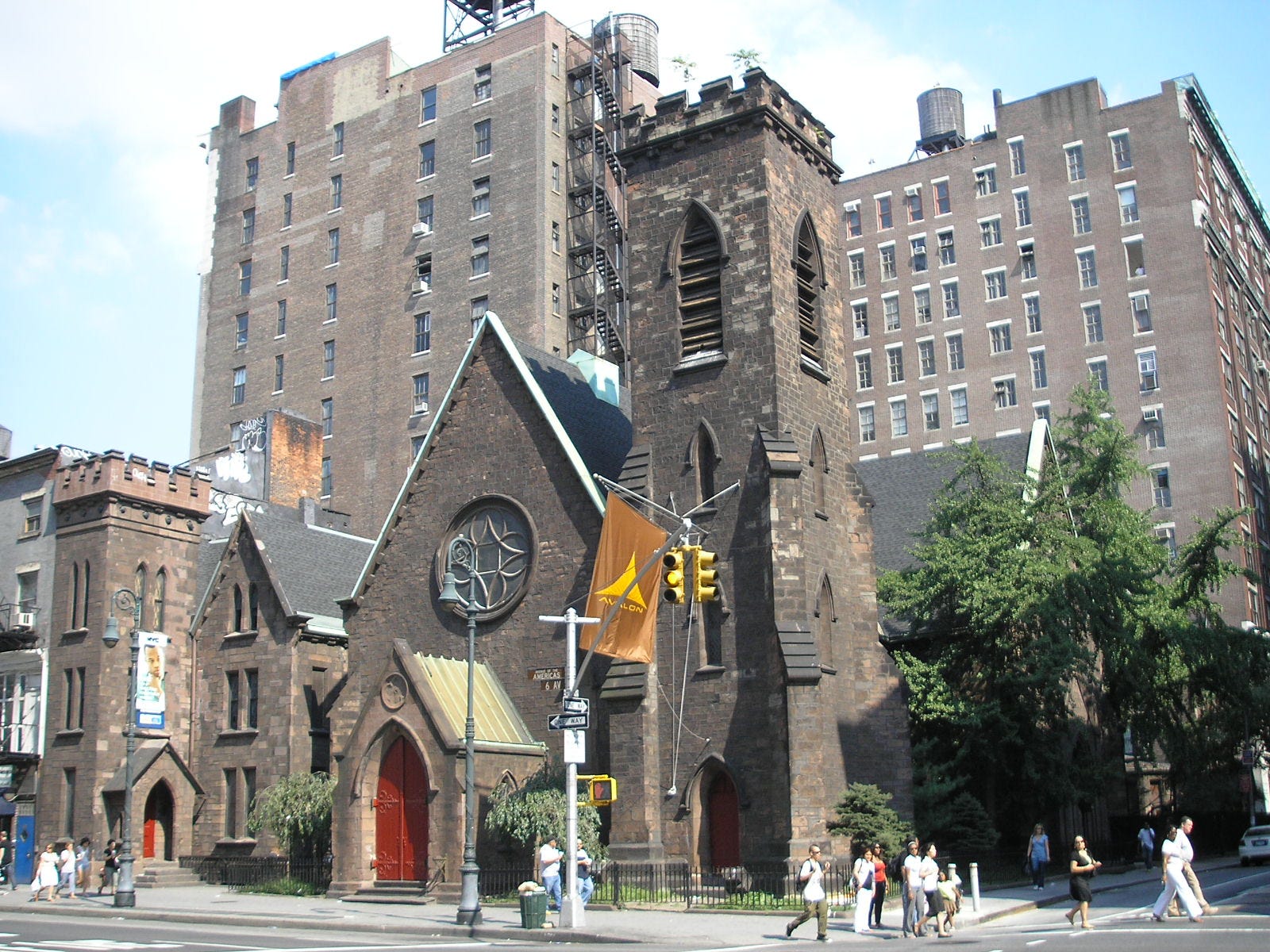
The Limelight in New York City was an offshoot of the legendary Limelight in Atlanta, the one located in a Buckhead strip mall next to a supermarket. The Disco Kroger was razed in 2023. ATL has no sense of its own history.
Club owner Peter Gatien took over an abandoned Episcopal church at the corner of 20th Street and 6th Avenue. Limelight became the successor to the closed Studio 54, with its enormous space gaining a following among tourists and the bridge-and-tunnel crowd.
Limelight existed in a parallel universe from the rock venues that underground bands typically played in the New York metro area. Both Dumptruck and Christmas had solid followings when they played CBGB and Maxwell’s in Hoboken, but a Limelight show would be a chance to reach a whole different audience in the big city.
Advertising
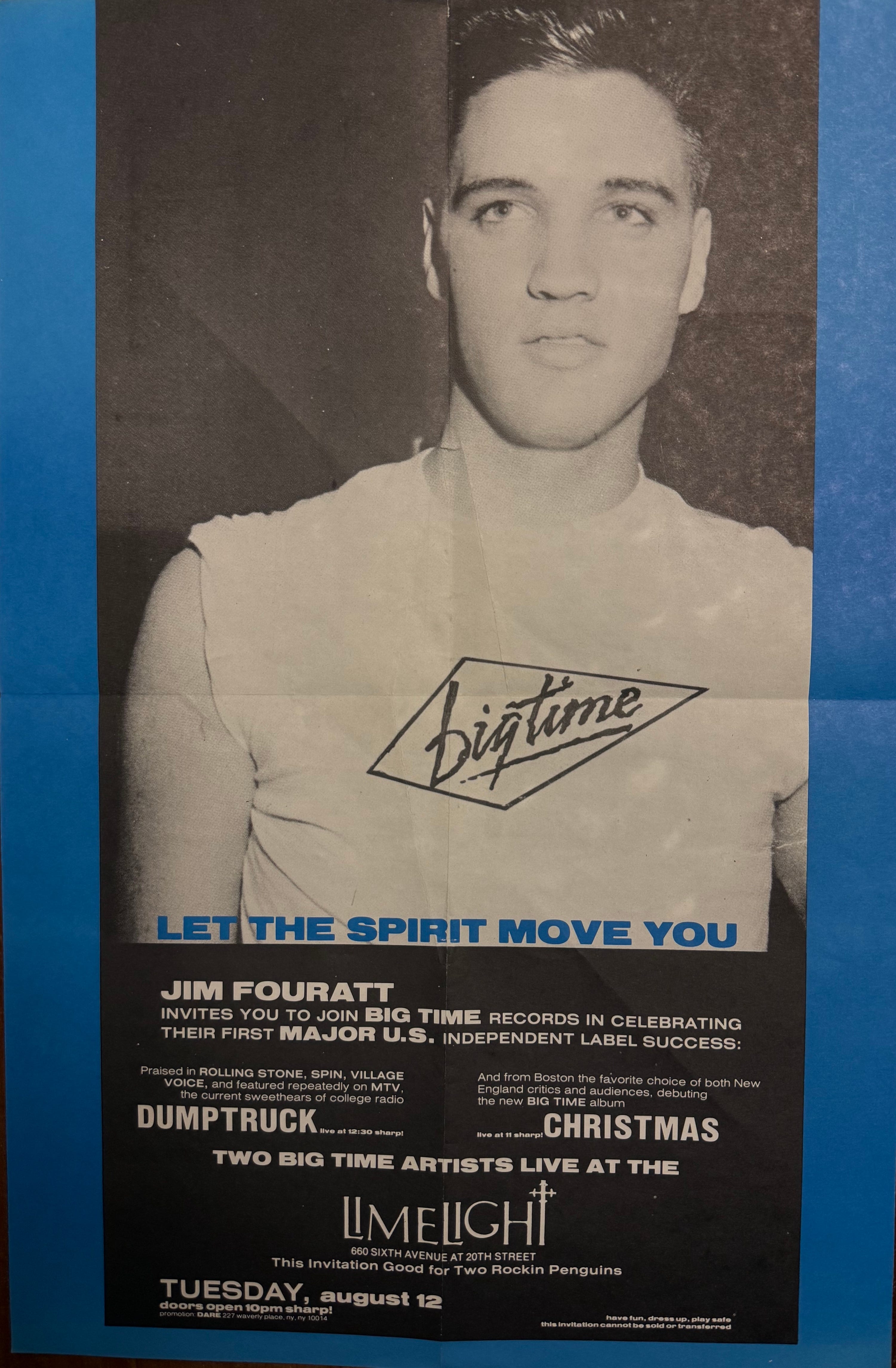
All of this started when someone shared this online. Turns out that it was offered for sale on eBay by Bill Ryan, who owned the great record store Pier Platters in Hoboken, and I bought this to hang in my office.
I never saw one of these back in 1986, and it’s a fascinating document.
First of all, this was kind of an early show for New York in that era: Doors at 10pm, Christmas at 11, Dumptruck at 12:30am. We didn’t think it was weird back then that headliners went on next-to-last at CBGB and often had weekend set times of 2am. You never, ever wanted to be the band who was last on the bill at Hilly Kristal’s bar. There were a lot of out-of-town bands who were shocked to face an empty room after they told everyone back home they were headlining.
The copy reads like it’s promoting a tony society event in the Hamptons, inviting you to “Join Big Time Records in celebrating their first major U.S. independent success.” As far as I know, Big Time invested zero dollars in this exclusive gala event.
The uninitiated punters could learn about the stamps of approval from MTV, Rolling Stone, SPIN and the Village Voice. This definitely sounds like a party designed to clue you into the next big time thing in the big city.
What I love about this most is how it brings back an era before social media. If you saw this poster in a window, there really wasn’t a way to research its (fortunately true) claims. You couldn’t easily go back and read what was printed in those magazines and the only way you’d see Dumptruck on MTV was if they showed the video when you happened to be watching.
The guarantee of quality here was the name of the promoter.
Jim Fouratt
Jim Fouratt is a true New York City legend, someone who should have inspired a biographer to tell the story of late 20th-century Manhattan through Jim’s personal experiences. I think we met at a New Music Seminar when I was still music director at my college radio station, and he was always enthusiastic about whatever I was working on back then.
In the ’60s, he cofounded the Yippies with Abbie Hoffman and Jerry Rubin and organized the Central Park Be-In. Jim was on the scene at the 1969 Stonewall Rebellion and also worked as Clive Davis’ assistant at Columbia Records.
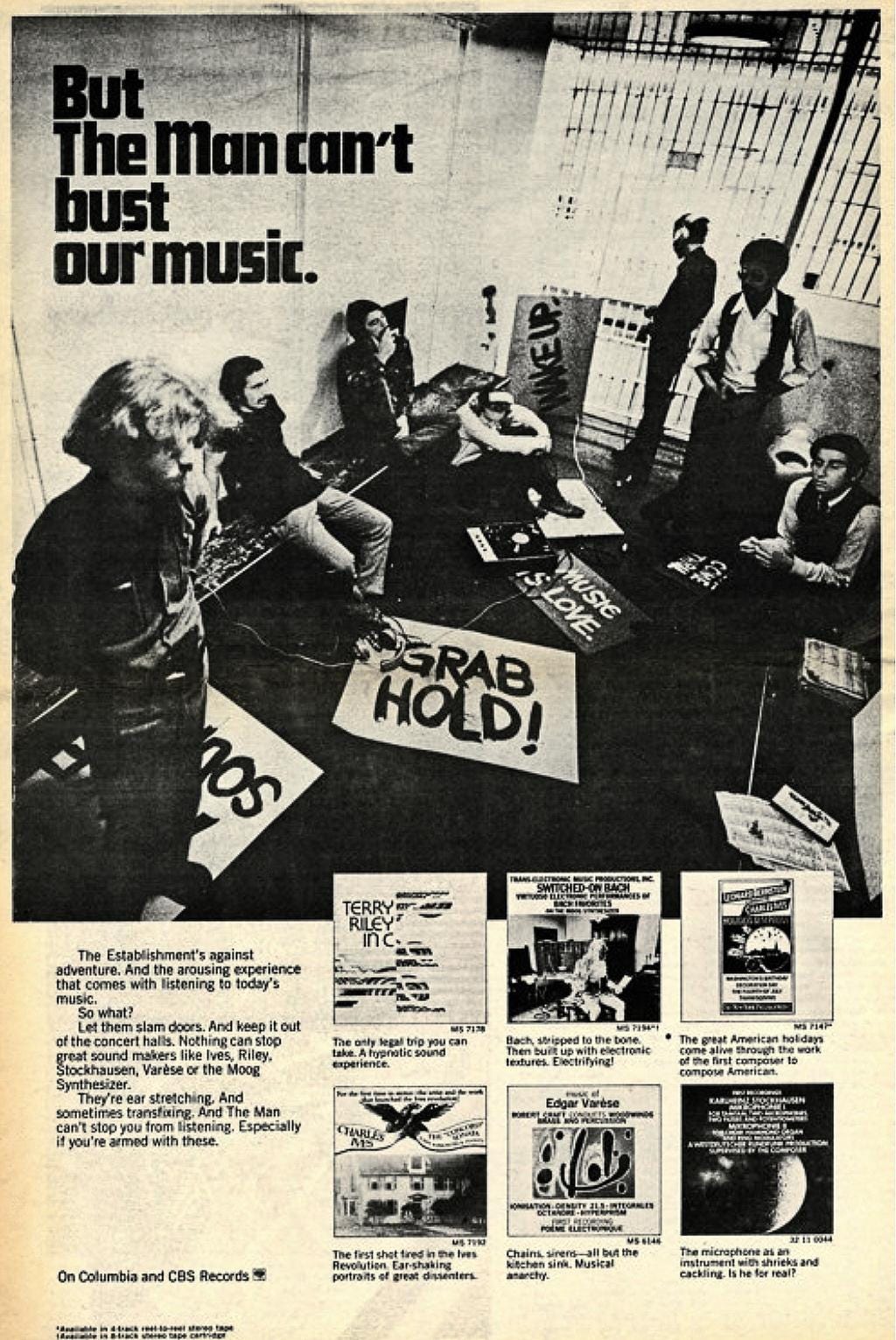
While working at Columbia, Jim wrote the copy for the notorious “The Man Can’t Bust Our Music” advertisement. The hippies hooted loudly that a major label was trying to appropriate underground culture, but I’ve always loved this ad, mostly because it was repositioning Columbia’s classical music catalog for a new generation instead of using the pitch to sell Chicago, Janis Joplin, and Santana.
Jim Fouratt has always been a passionate advocate for whatever politics or music he loved at the time, so much so that his personality became a lightning rod for some of his contemporaries. As I grew into my career in the business, I met a few New York music types who were totally convinced that Fouratt was actually an informant for the FBI’s COINTELPRO counterintelligence program. I think that’s absurd and share only to illustrate what a larger-than-life figure he was.
OK, that seems like plenty of material for a compelling book, right? Just wait, there’s more.
Jim Fouratt was the manager of Hurrah before opening Danceteria in 1980. That puts him a ground zero for the post-punk underground music explosion in America, and he always had unassailable taste. R.E.M. played their first NYC headline show at the venue, and there are dozens of U.K. bands who played their first U.S. gig in the room.
Jim was later a prominent member of ACT UP and went on to work in publicity for Rhino Records and A&R for Mercury Records in the ’90s. Like most of our contemporaries, his major label career was a casualty of Seagram’s Universal/PolyGram merger in 1999.
Jim’s still with us. Let’s hope he’s been working on a memoir. Apparently he’s donated 210 boxes of personal papers to the Yale Archive if anyone wants to research their own book.
In 1986, Jim had left the Danceteria and was promoting shows around NYC.
Showdown on 6th Avenue
At Danceteria, Jim Fouratt had successfully introduced post-punk to the disco crowd, so he believed he could bring the same magic to Limelight. Manhattan in 1986 was a much different place than it had been in 1980, and Limelight’s crowd wasn’t nearly as hip as its patrons thought they were.
Christmas bashed through their set with all the sharp edges and theatricality that made them so compelling to the right crowd and so confusing to everyone else. The sparse crowd was confused, and went back to furiously dancing when the set was over.
Maybe they’d prefer Dumptruck, a band with a guitar sound that had at least a passing connection to music the crowd might know, like maybe Neil Young or R.E.M. Everyone just wanted to get through their set, get paid, and head back up to Boston.
I don’t think the band made it through three songs before the club cut the power. It was humiliating, I was very young, and I couldn’t let it stand. I don’t know exactly how the band was dealing with it, because I was confronting the guy who seemed to be in charge about how we had a contract for the date and the band was damn well going to finish their set.
Again, there are no digital photos from that night, so I can’t guarantee that my memory of the guy looking like a member of Tony Soprano’s crew is 100% accurate. The club escorted me out the front door and I continued to argue with the guy while standing on the sidewalk on 6th Avenue.
I’m not sure that arguing is the right word, because I’m pretty sure I was shouting at the guy and he was looking at me with an arched eyebrow. Also, I first typed that this occurred in the middle of 6th Avenue, but that also seems ridiculous.
Members of both bands and Jim Fouratt may have different memories of that night, and their versions could be more or less accurate than my own. We were all on a mission back then to save the world from bad music, and that sense of purpose fueled my questionable choices. A more mature me would have collected the cash and laughed it off.
Now the poster hangs on my wall, reminding me that how lucky we all were to live through such interesting times.
Goodbye to Monoman
I mentioned Jeff Connolly of the Lyres in my last post about how relatively famous American musicians have turned to crowdfunding to pay for catastrophic healthcare. Unfortunately, Jeff died just a few days after.
There’s a real tendency to describe the recently departed in only the most glowing terms, but celebrations of Jeff have been remarkably forthcoming about his complicated relationship with almost everyone else in the Boston music scene.
We had a run-in earlier this year about some imaginary nonsense from ancient times that he wanted to blame on me, and I’m grateful that we mostly worked it out in a series of direct messages. And, no, it’s none of your business what we were working out.
One of the first things I learned when I signed on to work at my college radio station WHRB is that Jeff wasn’t allowed in the building because he had a habit of stealing the rare 45s from our collection. He just couldn’t help himself.
At a time when everyone was covering the Beatles, contrarian Jeff chose to record an absolutely ripping version of “The Way I Feel About You,” a B-side from BEST of the Beatles, a/k/a the Pete Best Combo. After he was sacked from the Beatles, drummer Pete Best moved to the USA and started a band that signed to an indie label who chose to market them in a most dubious fashion.
There’s so much going on here. You know there were Cavern Club fans who would insist that Ringo was a downgrade and Pete was the real soul of the band. Jeff might not have actually believed that the Pete Best Beatles were the Best Beatles, but he was most certainly the kind of agitator who wouldn’t mind if you thought that was his opinion.
Jeff Connolly was one of the greatest characters in an ’80s scene overflowing with eccentric iconoclasts. We were all blessed to share an era with him.
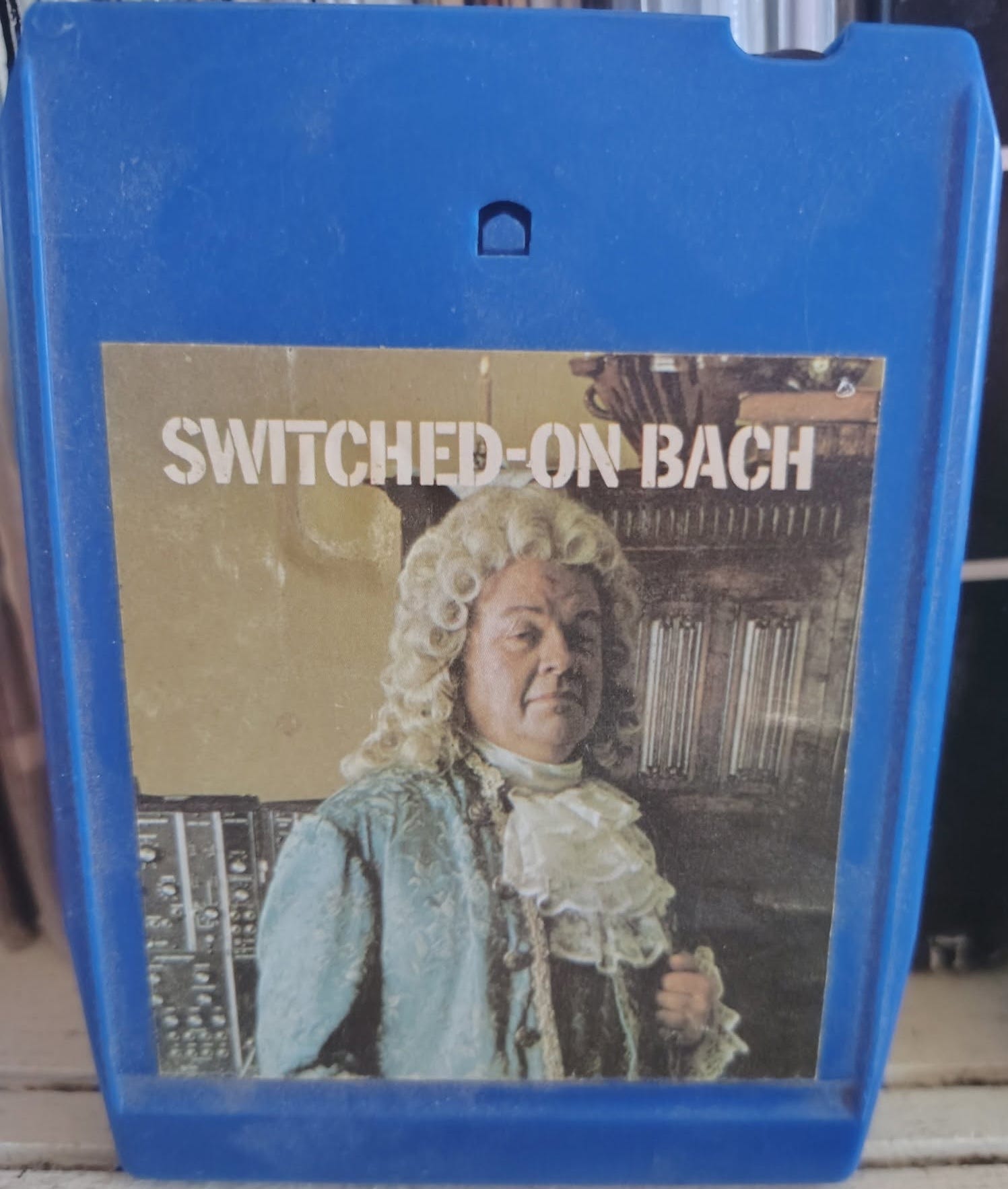
8-Track of the Day
This is great, Jim, thanks.
For some reason I just saw this, Jim. I’m glad you “mostly worked it out” with Jeff before he split this mortal coil. Conolly was a complicated cat. It seemed like past & current conflicts, real or imagined, fueled him for much of his life.
I was surprised he & I became friendly the last 5-6 years. He still couldn’t resist occasionally busting my balls for my ancient Alt Rock sins e.g. airplay for The Red Hot Chili Peppers, Jane’s Addiction, etc. He let up once he realized I was conversant in his 60s garage rock world. I was listening to The Sonics, etc., in high school.
Unfortunately, the Dumptruck/Christmas Limelight gig was months before I scored the WFNX MD gig. Otherwise I might’ve made the trip to NYC for that spectacle. Instead I was on the verge of quitting the station for the first time. By November I was likely the biggest Dumptruck commercial radio supporter. We played Christmas’ “Big Plans” quite a bit too. It’s come to the point where it was so long ago all that stuff might as well have happened to someone else.
If someone wrote a novel with a Jim Fouratt-like guy in it accomplishing half of what the real man has accomplished, reviewers would say, “this character is not believable .”