


When I started writing this newsletters, the idea was to share great music, tell funny stories about the music business, and explain some of the hard-to-grasp copyright and legal concepts that confuse even the most experienced musicians and industry veterans. Good vibes only.
The real world keeps intruding, though. I’m going to try to make this a tribute to some beloved friends while sharing some of the thoughts that have been haunting me about the creative class here in the USA.
That inspires a question for readers who aren’t American. I never hear about legendary English, Irish, Scottish, Australian, Canadian, or European rock musicians who turn to crowdfunding to raise money for medical care. Is that because I’m not paying attention, or do those cultures have systems in place to offer catastrophic health care?
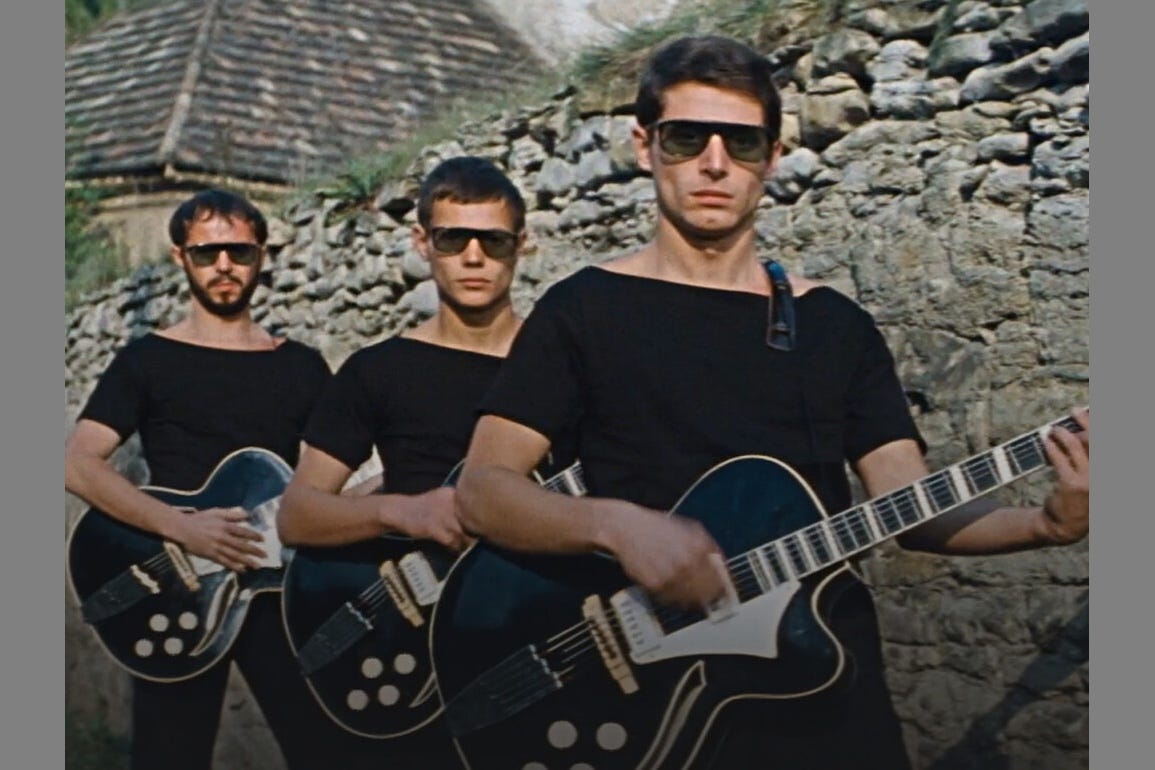
Last week brought news of my old friend Jennifer Finch’s illness, an outpouring of support from the community, and her sooner-than expected death. I knew Jennifer (I never called her Finch or Precious, but I know plenty of you did) during a particularly rocky time in my life and both our careers. She was incredibly generous and kind, the kind of person who reminds you that we’re all capable of being better than we are.
She became a grunge icon as bassist for L7, a band that may never have sold millions but had success largely on its on terms in a scene that was generally hostile to women. “Shove” is the greatest song ever about respect in the mosh pit, and “Pretend That We’re Dead” was deservedly a huge alternative hit during the underground explosion of 1992.
That’s just a sliver of her accomplishments. She was a member of the SF trio Sugar Baby Doll, America’s version of Liverpool’s legendary the Crucial Three. I first met her when she was in the A&M band Other Star People. They’d just made Diamonds in the Belly of the Dog, a sparkling debut album helmed by the legendary Cars and Queen producer Roy Thomas Baker, and I was meeting with Roy about producing a followup album for Geffen Records band Big Blue Hearts.
A&M and Geffen both got shut down in January 1999, and Other Star People’s finished and ready-to-release album was shuffled over to Interscope, which sat on it for six months before giving it the most cursory release possible. It was a crushing experience for everyone involved. That album title proved to be a prediction of its fate.
Jennifer reacted in the most punk rock way possible, forming a punk band called the Shocker with some youngsters from the LA scene. In addition to picking a band name that would scare off the majors, she called their debut EP Up Your Ass Tray. They played the Vans Tour and successfully toured Europe. I’m sure there are fans in Italy or Croatia who will tell you they’re the greatest band they’ve ever seen.
She was also a gifted photographer and graphic designer. She recently played a major role in the launch of the Punk Rock Museum in Las Vegas. Her incredible documentary photos of the early scene have been a critical asset to the exhibits there.
Most recently, Jennifer was dealing with a massive brain tumor until her friends and family decided they needed to launch a GoFundMe to cover her anticipated expenses. She dropped out of the upcoming L7 tour, and the fundraiser site made it clear that the aim was to make her remaining days as comfortable as possible.
The response was immediate and overwhelming. Friends and fans stepped up in a huge way and, within a couple of days, the community had donated enough money that Jennifer could get the best possible care for her remaining months or years.
Unfortunately, there were only days left and she died over the next weekend. We hadn’t been in contact much since the pandemic, but I’ll always be grateful for her kindness during a particularly tough time in my life in Los Angeles.
Jennifer’s not the only legendary artist who’s turned to crowdfunding when facing a health challenge.
Matthew Sweet is still dealing with the fallout from the stroke he suffered in 2024. Everyone justifiably loved Girlfriend in 1991, but that album didn’t become the kind of massive hit that would have set him up for life. Future albums did well, but he never quite made it to the private jets and castle in France life enjoyed by the biggest bands of his era.
Jeff Connolly changed a lot of lives with the Lyres, but he never really made any money. He’s suffering from bladder cancer, and he’s been looking to raise money for his chemo treatment. He’s not my biggest fan, but I remain one of his.
Steve May founded the 688 Club in Atlanta, one of the foundational venues for underground music’s rise in the ’80s. There are probably dozens of UK bands who decided to attempt a proper US tour once Atlanta became an anchor city for alternative music. Before 688, visiting bands would showcase in NYC and maybe tack on a Boston gig. The really ambitious ones might also fly to LA for a show. Everyone in flyover country was out of luck.
Anyone who made money in the New Wave era owes Steve a debt of gratitude. Last month, there was a now-closed fundraiser for him to help Steve get off the street and get help from some the programs available to him.
I suppose a lot of this comes down to what a culture values. An overwhelming number of artists aren’t very good at the kind of financial planning and steady employment that gives a reasonable percentage of Americans a stable life. Plenty of them never make enough money to achieve that kind of security, no matter how well they manage their assets.
As time passes, I wonder if we shouldn’t be careful how we define “successful” and “hard work.” There are some endeavors that make a substantial contribution to society and culture, but it’s impossible to quantify those contributions on a profit-and-loss spreadsheet.
Great (and popular) artists emerge from a scene. It’s the culture of painting, music, writing, dance, and theater that creates an environment that nurtures the talent that produces the most inspiring art. The people who don’t succeed are crucial to the success of those who do. Think Memphis 1956, Los Angeles 1966, New York City and London 1976, Athens 1981, Seattle 1989.
There are people I respect who will have trouble with this viewpoint because they don’t think society should incentivize irresponsibility and what a lot of people see as laziness. It’s true that creatives don’t always look like they’re creating when they’re having the experiences that inform their art.
Here’s the riddle we’ve yet to solve. Lots of hardworking people treasure the art that creatives make but don’t really like the chaotic artist lifestyles that foster that work. Do we value art enough to subsidize its creation?
We’ve reached a point where many careers in the arts and sports like baseball and soccer are limited to people whose families can subsidize their training and lean years before success. Would Gracie Abrams have a #1 album this week if her dad was a fireman in upstate New York instead of the guy who ruined Star Wars?
I’ve been writing here about relatively high-profile music people who’ve had commercial success or have been recognized as incredibly influential on music culture. What about the rest of the artists who didn’t enjoy the same prominence? Every successful artist comes out of a scene made up of musicians who don’t enjoy the same fame or relative fortune. What are those folks supposed to do when they can’t turn to crowdfunding in a crisis?
Jennifer Finch’s friends and family have announced that they’re going to use the money they raised to preserve her archive, with the balance going to MusiCares, the Recording Academy’s charity that provides emergency financial assistance to needy people in our community.
We should all continue to support our friends in need as best we can, but I’d like to think there’s a better way forward than depending on the kindness of strangers to heal our disease or ease our passage to the next life.
I’d also recommend that you check out Backline, an organization dedicate to providing mental health care for people who work in music.
What’s your solution?
Reading group
Colson Whitehead just published Cool Machine, the third and final novel in his Harlem Trilogy. He’s a respected literary writer, but these books are fully committed crime fiction. The three books take place over 4 decades, telling stories from the life of Ray Carney, an up-and-comer who’s built a successful furniture store business with some help from his side hustle as a fence for stolen goods.
The new book takes place in the ’80s and features an incredible tale with Carney’s colleague Pepper working as a bodyguard for a shady deal taking place in the art and underground music scene of the East Village and Lower East side.
Whitehead would have been around 14 years old and his description of the neighborhood in that era seems to owe more to what he saw with his own eyes than to the kind of incredible research he did for the earlier books.
Pepper is trying to track missing money and he’s being guided by a young woman with a mohawk who calls herself LJ (after “Little Johnny Jewel). That sets up a solid Television joke. Pepper notices some music posters and contemplates the new generation of bands.
Pepper squinted at the alien language on the wheat-pasted posters in a doorway and realized he was reading the name of bands:
PULSALLAMA LIQUID LIQUID PYLON
He screwed his mouth tight. What the hell was a Liquid Liquid? Sounded like the complaint of an angry janitor. Harold Melvin and the Blue Notes—that was a proper name for a group. There was a mastermind, and he put together a crew, and they pulled jobs, but in this case it was music. A pylon was highway equipment. What did that have to do with anything? The kids probably did their herky-jerky dances while they played.
Pepper’s always had great instincts, and he’s 100% correct that the kids did jerky-jerky dances when Pylon played.
8-Track of the Day
Sorry, James, this is something I know quite a bit about having done work in the health care sector. So this may seem a bit long-winded, but you'll see why. I do want to take your query seriously.
Residents of the UK are fortunate in that they have free national health care through the National Health Service (NHS). The care is variable depending on where you live, can involve waiting lists for services, and those with resources often choose to secure private health care as well to give them more options. But, having lived there for almost two decades, I found the system worked quite well and took away the anxiety of how to pay for treatment as everything was covered. I have worked with managers in the NHS and can say from personal experience that they are remarkably passionate about what they do.
In direct contrast, the US has become the most expensive health care system in the world and many families have had to declare bankruptcy because of the cost of a single illness or accident. It's not just musicians who have had to crowdsource to cover medical expenses. This is now a national crisis that is affecting everyone. As AI sums up, "The United States spends significantly more per person on health care than any other industrialized nation, yet it ranks last in overall health system performance, facing lower life expectancy and higher rates of avoidable deaths.... High prices for services, pharmaceuticals, and administrative complexity rather than higher utilization drive the cost gap."
Hospitals and medical practices are being bought up by private equity that places return on investment and profit above all else. This is at the root of the problem because they are charging outrageous fees for even a bandaid. Hence the cost of Jennifer's health care, which she would have gotten free in the UK and would not have had to crowdsource. We used to have reasonable health care costs and good outcomes in the US, but those days are long gone. We now have the worst health care system in the industrialized world.
So I agree with marlena m. that we need a universal health care system like the UK's. The system has been proved elsewhere, it works, and it doesn't impoverish and bankrupt everyone but the well-off (or eat up a huge part of the national budget in Medicare expenses).
Greg Gilbert of The Delays turned to crowdfunding to try to raise £100k for a cancer treatment that was unavailable in the UK for some reason. I gave generously because "Faded Seaside Glamour" was a favorite of mine in the early 2000s. Sadly he passed in 2021.