


We've got problem with our large language model. No one seems to agree on what we mean by “AI.”
For me, artificial intelligence is a tool that will unlock a whole new suite of creative options for the most talented composers and musicians. We’re looking at a revolution every bit as earth-shaking as the one wrought by overdubbing onto magnetic tape.
For a lot of people, AI equals the digital slop that’s polluting our online lives with dumbass memes and laughable songs. That garbage certainly drives a huge part of the business model for companies who are sucking up all the investment capital and scaring normal people.
After I wrote about Bandcamp’s misguided new AI policy, I got a lot of pushback from people who are convinced that slop is the only thing AI can make. Fortunately that’s not true, even though we’re seeing a lot of untalented people creating garbage here in the early days.
The good news is that this problem will solve itself.
Maybe it won’t happen in a way that turns the clock back to 1974, a year that now seems to be the peak of songwriting and recording techniques so widely mourned online. But I can see a future where artists will have more control and freedom to make music their way after decades of being blocked by the copyright police.
I want to be very definite about something: This is not me being provocative or trolling for clicks. I’ve come to this perspective after a lot of conversations with people I trust and respect, and even more introspection about what drives my overall ideas about songwriting and copyright.
Creative people who can embrace the new paradigm should be very excited for the future.
Some background
This recent hit video from Rick Beato offers some excellent context.
Rick and I had a conversation about AI before he made this video, and I think it’s one of his best ever commentaries on the business of music.
Short version of Rick’s point: Most giant studios went out of business in the early 21st century after digital recording software allowed producers and musicians to record at home. Owners who had borrowed a ton of money to buy expensive properties in the heart of New York and LA and filled them with top-of-the-line desks and recording gear were screwed when their clientele could get 90% of their studio’s capabilities for 10% of the price (math not guaranteed).
Rick demonstrates that it’s possible today to run most AI software offline on your own device if you have the (not unreasonable) resources to invest in a home setup capable of enough processing power. We’re not talking about server farms, just something a step up from what most home studios are now running.
Who’s going to pay the real prices that ChatGPT or Grok or Anthropic will need to charge if they ever want to turn a profit? They’re spending BILLIONS to build these server farms, taxing local power grids, and bleeding investors dry. What’s going to happen when everyone figures out how to can build their own setup, a decision that will come with a bonus: Anyone who hosts their own offline artificial intelligence platform will no longer be giving away their own data to the tech overlords who own OpenAI, Grok, Anthropic, or Google.
More control, more privacy, less taxing for the environment. It’s blindingly obvious.
Your own private music platform
I’ll go one step further than Rick on this subject. The most exciting part to me is the idea we’ll all be able to train our own private AI-powered music platforms using only the music we want.
The next generation’s Prince or Brian Wilson will build their own offline music production model, one trained only on the relevant music they want to be a part of their personal creative process. Those private models will be jealously guarded and every bit as revered as the custom audio chains that engineers and producers have been creating since the beginning of electrical recording.
In fact, I know of at least one hall-of-fame producer who’s been working on this idea for years. Train a model on all of your own hits and influences, learn to interact with the software, and you’ve built a creative tool that reflects your own wants and needs.
That tool won’t always be used to create entire tracks from scratch. Maybe it generates a beat that inspires a different one or helps figure out a progression or a guitar tone. Maybe it fills in some lyrical gaps or inspires a solo on a day when your usual crew is out of ideas.
Anyone who’s spent enough time in recording studios and been lucky enough to be in the room when hit records were made knows that not every magical moment results from a conscious choice by someone in the room. The idea that the people who make the records are directly responsible for every sound you hear is a myth rooted in the crazy idea that a movie director is responsible for everything that happens on a film set.
Genius is knowing what take to use, when to stop recording, how to get a musician (or computer) to give you the feeling you need.
Suno and Udio will crash and burn because it will be easier to program your own offline model than it will be to wrestle with the prompts and trick the giant server farms into creating something great. They’re building giant recording studios when what real musicians really want is a smaller system that caters to their own tastes and needs.
As for the idea that computers will take over the process, I offer this perspective. Let’s say that Max Martin decides to build the ultimate Max offline music software and incorporates that tool into his writing and production process. I’ll maintain that the tool will be nearly useless in fifty years when Max is no longer around to make the decisions about what output to use and how to refine whatever songs it generates. Without new input from the master, the songs will just keep getting worse.
Music vs. software programming
There’s a spiritual crisis going on in computer programming. For a couple of generations, we’ve told kids that they will always be able to get a job if they learned how to programming. Stay away from stupid things like art, they said, learn a trade that will feed you for life!
Low-level programming jobs are vaporizing faster than A&R gigs did in 1999.
The extremely talented engineers at Soapbox are building customized LMS and database software using AI, and the results are far better (and infinitely less expensive) that hiring outside consultants. I know that the excellent copyright management tools at 24/7 Artists have been built from the ground up by the founders using AI. Even though they don’t have previous programming experience, they understand the product they’re building better than the professionals ever did.
What’s going on in software relates to music because the best creative minds in that field work in much the same way producers do in ours. John Gruber writes about technology at Daring Fireball, and I was struck by this post about the AI crisis in the software business.
The divide I’m seeing is that the developers who are craftspeople are elated because their productivity is skyrocketing while their craftsmanship remains unchanged — or perhaps even improved. They’re achieving much more, much faster, than ever before. It’s a step change as great, or greater than, the transition from assembly code to higher-level programming languages. The developers who are hacks are elated because it’s like they’ve been provided an autopilot switch for a task they never enjoyed or really even understood properly in the first place. The industry is riddled with hack developers, because in the last 15-20 years, as the demand for software far outstripped the supply of programmers who wanted to write code because they love writing code and creating software, the jobs have been filled by people who got into the racket simply because they were high-paying jobs in high demand. Good programmers create software for fun, outside their jobs. Hack programmers are no more likely to write software for fun than a garbage man is to collect trash on his days off.
Orchard’s fine essay examines a philosophical divide within the ranks of talented, considerate craftsperson developers. The divide that I’m talking about has been present ever since the demand for programmers exploded, but AI code generation tooling is turning it into an expansive gulf. The best programmers are more clearly the best than ever before. The worst programmers have gone from laying a few turds a day to spewing veritable mountains of hot steaming stinky shit, while beaming with pride at their increased productivity.
If he was writing about music, that last sentence would be the best description yet of what Sudo or Udio are serving up daily. Most of that output is horrible.
Later in the day, Jon followed with “Software Bonkers,” a post about developer Craig Mod’s joy at what he’s able to do with Claude Code.
Don’t get distracted by the mountains of steaming shit that hacks are using these tools to spew. There are amazing things being built by these tools that never would have, or in some cases could have, been built before.
It’s the artists who are going to make sense of these tools, and they’re going to work best as a complement to rather than a replacement for the working techniques they’ve been using for decades.
That last sentence is not an accurate one. If you look at the techniques we were all using in 1999 and compare them to today’s workflow, you’d have to admit that today’s recording sessions have little in common with what we were doing back in the 20th century. And let’s not even get into the pre-automation tape era back in the ’70s.
Artists have been incorporating new tools into music recording for well over a century, and there’s always someone who thinks the new ways are going to screw everything up forever. All of your favorite music was made with techniques that someone once thought were sacrilege.
There’s also a negative side
Wait, you say, what about my COPYRIGHTS?!?!?!?!?!
The current war over how the big box AI companies will compensate artists for using their work to train their models is a lost cause.
They’ll make those deals, leaving songwriters and recording artists to complain about whatever pittance they get paid from the licensing fees the publishers and labels are able to negotiate.
If you were paying attention above, you’ve probably already realized that no producer or songwriter is ever going to share details about what he or she used to train their own private music AI platform. If those platforms never go online, there’s no amount of blockchain magic that will make copyright holders able to track what you or I have uploaded to our private server.
This is directly connected to the mistakes we made with sampling back circa 1990. At the very least, we could have defined a compulsory sample license that would have set a standard rate for each usage. When someone actually used a melody or lyric, there could have been a negotiated copyright split, just like the splits anyone who wanted to quote another song would have been required to do before sampling existed.
Instead, each copyright holder could set their own rates and hold out for as much cash as possible or deny the requests altogether.
Here’s the problem with that: Let’s take Led Zeppelin as an example because they’ve been established as song recyclers in their own music. They’ve lost some copyright lawsuits and been forced to share song credits with blues and folk artists.
The next question is whether those blues and folk writers came up with those songs entirely themselves, or did they piece together bits from old, pre-copyright music and register the new composition to get credit?
Anyone who’s writing anything is drawing on all the music they’ve ever heard, every other person they’ve played a song with, and sometimes the inspiration is a line from a novel or a movie. I know people who’ve written some of their best songs after staring at a painting for a few hours.
The truth is that music copyright was designed to protect the rights to sell sheet music based on the lyric and melody of a composition. Arrangements, guitar solos, and other musical embellishments have traditionally been cut out of the royalty flow.
The current generation of artists understands this, and modern song copyrights often include everyone who made a significant contribution to the track. This is the source of boomer grousing about how much better things used to be in the olden times, back when Paul McCartney could write a great song all by himself.
Beatles copyrights ignore the creative contributions made by George Harrison, Ringo Starr, George Martin, and the EMI Studios engineers who came up with a lot of the tape tricks that built some of the band’s best hooks. The truth is that a more equitable split would have seen Lennon and McCartney including their collaborators in the copyright.
This is likely to be traumatic for Boomers, Gen X, and even a few elder millennials who grew up thinking of songs as things created by a single person with a guitar or piano working out melody and lyrics.
Labels, artists, and publishers will continue to make money off music in the same way they always have. When a track is streamed, licensed, sold, or played on the radio, those copyrights will continue generate revenue for the creators.
Otherwise, those songs are going to be absorbed back into the collective creative unconscious. All that extra gravy from sample clearances is going to disappear. Anything that gets the industry to focus on making new music and developing the next generation of artists seems like a win to me.
Could this go wrong?
All of the above is speculation, but it’s informed by years of wrestling with copyrights, licensing, and the creative process of making music. Could the governments of the world intervene to limit the availability and usefulness of these new tools? It’s possible but not very likely.
Stakeholders who’ve profited from the current system won’t like what’s coming, but the assumptions that underpinned our copyright laws are hopelessly entangled with a physical distribution model that no longer drives the culture.
All art is derivative. Even if we’re not sampling (or quoting directly), we’re all taking ideas from someone else. A healthy copyright system will protect each individual work and allow its creators to collect the money they earn.
Yeah, I realize there’s not much room for the Great American Songbook in this new reality, but we’re also living in a moment when the artificial line between songs and tracks is evaporating.
The 19th-century idea that recording technology will allow us to preserve an unfiltered live performance began to erode when we invented electrical recording back in the 1920s, and it’s been a relentless march toward a new paradigm ever since.
It’s okay to age out of popular culture. Avatars of taste thought the Beatles and Rolling Stones (not to mention Albert Ayler or the Stooges) were dragging culture into the gutter and destroying music as an art form. Time and perspective (and the next generation) will likely offer ideas about art that are different from the ones we learned in the late 20th century.
I’m planning to hang around for a while to find out what happens. This is the most exciting time for music in decades.
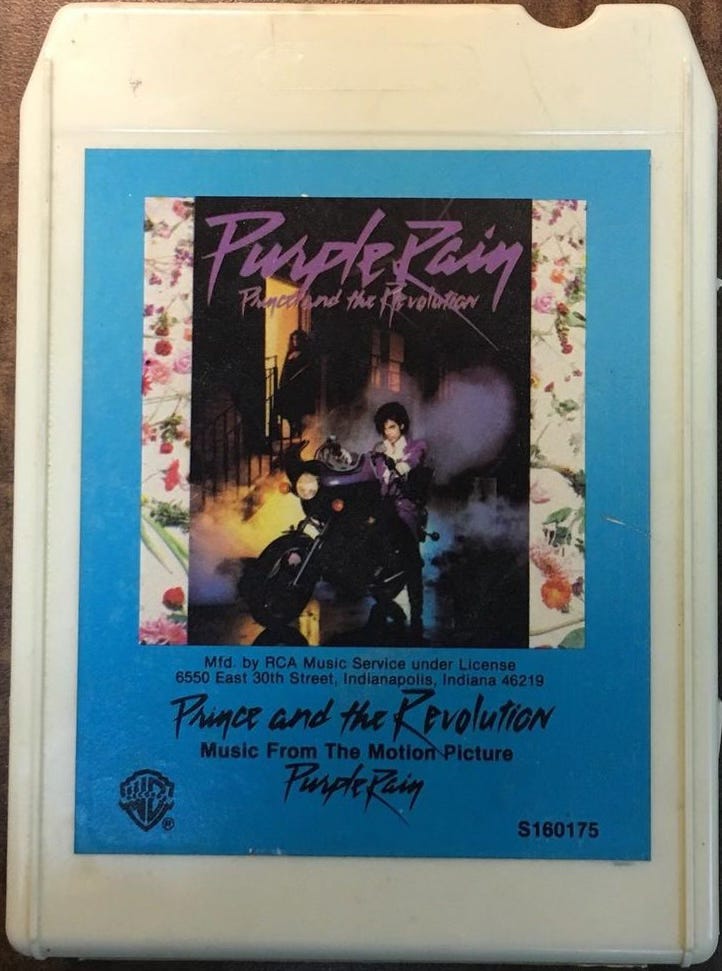
8-Track of the Day
Does music creation really require more automated speed & efficiency? Are musicians really less creative than they were in 1974 and now in need of sepcial assistance?
I feel that the point that you, Rick, and a lot of people who feel that the AI problem for creatives will work itself out are missing is the environmental and health impact the data centers have already had an impact on. And this will only continue to grow. It is really this point that demands that AI as whole needs to be stopped. It is not sustainable for the health of earth's ecosystems, nor the health of us humans and the other denizens we share this planet with. There needs to be a halt to it, and a very thorough assessment of how this could be alleviated to be able to continue.